
About RE:PLATE
If you had told me twenty years ago that I would end up building a company for independent restaurants, I probably would have laughed. My career began in design and advertising, and for a long time I thought that was where it would stay. I loved the work because design, at its best, isn't about making things look better. It's about understanding people well enough to remove friction from their lives. Every project began with the same question: what is the real problem? Not the obvious one, not the one everyone talks about, but the one sitting quietly underneath everything else. That way of thinking became second nature, and without realizing it, it followed me everywhere I went.
The strange part is that while I was building a career in advertising, I was spending almost all of my free time somewhere completely different. I was in neighborhood bars, independent restaurants, and small cafés because those were the places that always felt real to me. Over time I got to know the people behind them. I became friends with bartenders, servers, cooks, chefs, managers, and owners. Eventually I reached a point where I had to admit something to myself that didn't make much sense on paper. I cared more about those places than I did about the career I had spent years building. So I left advertising and became a bartender.
Most people thought I was making a mistake. Looking back, I don't think I changed careers at all. I think I carried the same way of thinking into a different world.
Restaurants are extraordinary places, but they're also unbelievably demanding ones. Every owner I have ever known wears more hats than anyone should reasonably be expected to wear. They hire staff, manage payroll, negotiate with vendors, repair equipment, solve customer problems, control food costs, balance schedules, answer emails, pay invoices, wash dishes when they're short-handed, and somehow still find the energy to walk into the dining room and make every guest feel welcome. Most people only experience the finished product. They never see the constant balancing act happening behind the scenes, and they never realize how many of those responsibilities have absolutely nothing to do with cooking great food or creating great hospitality.
The longer I worked in restaurants, the more I noticed something that I couldn't stop thinking about. Every few years another responsibility seemed to appear, and before long it simply became accepted as part of owning a restaurant. Nobody questioned it anymore because that's just how things were done. Owners were expected to become marketers, social media managers, photographers, designers, and content creators on top of everything else they were already carrying. None of those things are unimportant. In fact, they're incredibly important. The problem was that every new responsibility took time away from the work that only they could do.
One of those responsibilities was creating professional food photography.
I've always believed restaurants deserve beautiful images. Great food deserves to be presented well, and in a world where someone's first impression usually happens on a phone screen, photography matters. I never questioned the value of professional imagery. I questioned the process required to create it.
The traditional workflow made perfect sense when it was created. Hire a photographer. Schedule a shoot. Coordinate everyone's calendars. Prepare every dish. Stage every plate. Spend hours creating images. Wait for editing. Receive the final gallery. Repeat the entire process the next time the menu changes. There is nothing wrong with that process. There is also nothing wrong with professional photographers. Their work is an art form, and I have enormous respect for the people who dedicate years of their lives to mastering it.
What bothered me was that independent restaurants had quietly inherited a workflow that wasn't built for the way they actually operate. They were expected to produce the same volume and quality of visual content as businesses with marketing departments, creative teams, and production budgets, despite having none of those resources. Every seasonal menu, every new cocktail, every special, every dessert, every idea coming out of the kitchen forced owners to decide whether it was worth interrupting the business they were trying to grow just to create the images needed to promote it.
I couldn't convince myself that this was the best we could do.
That thought stayed with me for a long time because I wasn't looking at photography anymore. I was looking at a system. I had spent years learning how visual communication worked, and I had spent years living inside restaurants. Those two experiences kept colliding in my head until I realized I wasn't interested in making better photographs. I was interested in removing unnecessary work from people who already had more than enough of it.
That is where RE:PLATE came from.
It wasn't built because I wanted to start a technology company, and it certainly wasn't built because I wanted to chase the latest trend. It was built because I believed independent restaurants deserved access to professional-quality imagery without sacrificing the time, money, and attention they needed to keep their businesses running. If technology could eliminate weeks of planning, thousands of dollars in production costs, and hours of disruption while still helping restaurants present themselves professionally, then technology wasn't replacing creativity. It was removing friction.
Everything RE:PLATE does is guided by that idea. Every feature, every decision, and every improvement begins with the same question I learned years ago in advertising: what is the real problem? More often than not, the answer isn't that restaurants need more tools. It's that they need fewer unnecessary burdens. If I can remove one of those burdens, even just one, then I've given an owner something far more valuable than another piece of software. I've given them back time they can spend with their guests, their staff, their families, or simply on running the restaurant they dreamed of opening in the first place.
I don't believe independent restaurants are small businesses because they lack ambition. I believe they're the heart of their communities. They're where people celebrate, grieve, reconnect, and build traditions without ever realizing it. They deserve every opportunity to compete with businesses that have larger budgets and bigger teams behind them, not because they need an advantage, but because they deserve access to the same quality of tools without being asked to carry another impossible workload.
RE:PLATE is simply my way of contributing to that goal. It combines everything I've learned from a lifetime spent in design, advertising, hospitality, and restaurants into one idea that feels surprisingly simple: professional imagery shouldn't require professional disruption. If I can help independent restaurants tell their story without asking them to stop living it, then I believe I'm working on the right problem.
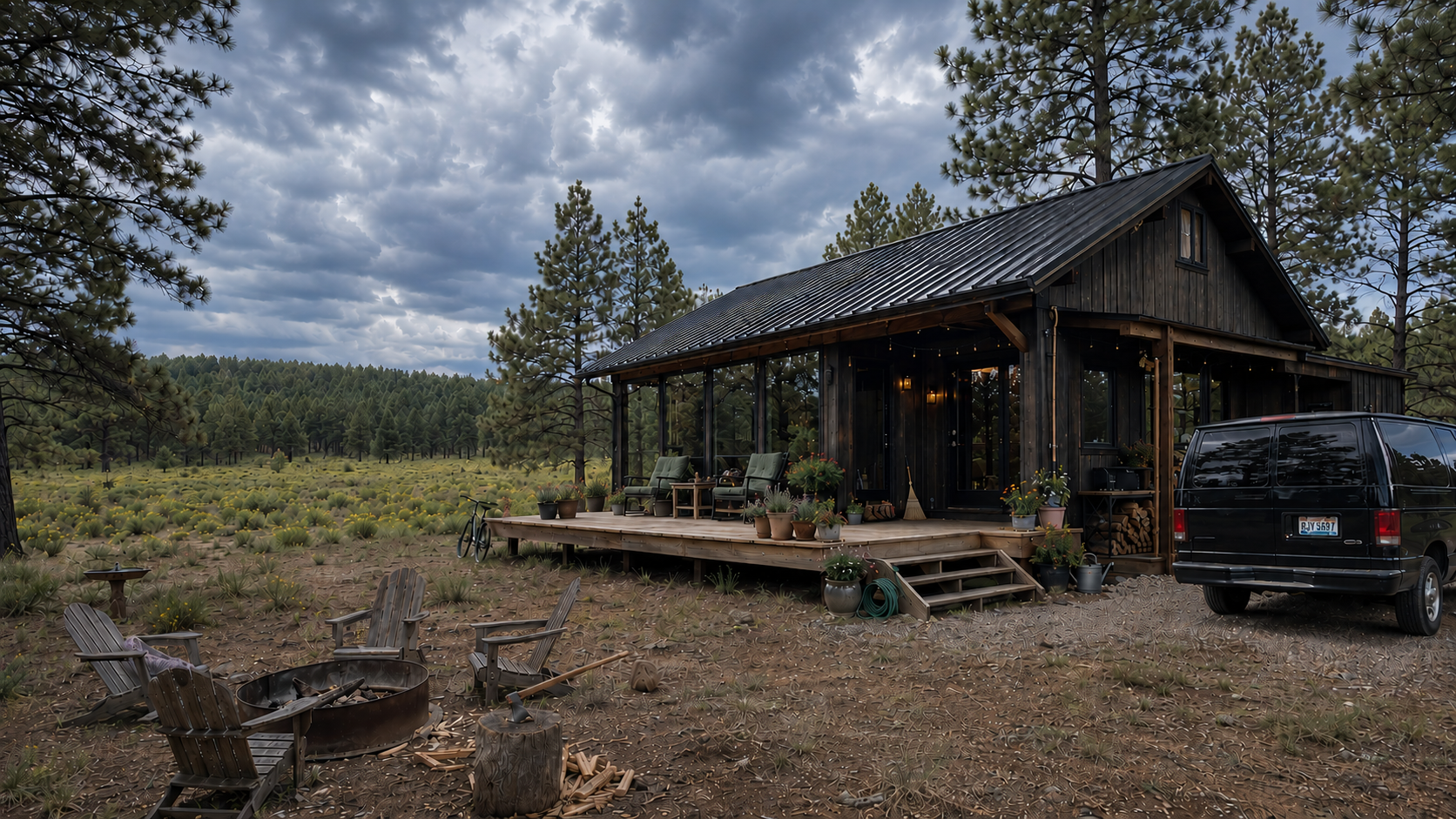
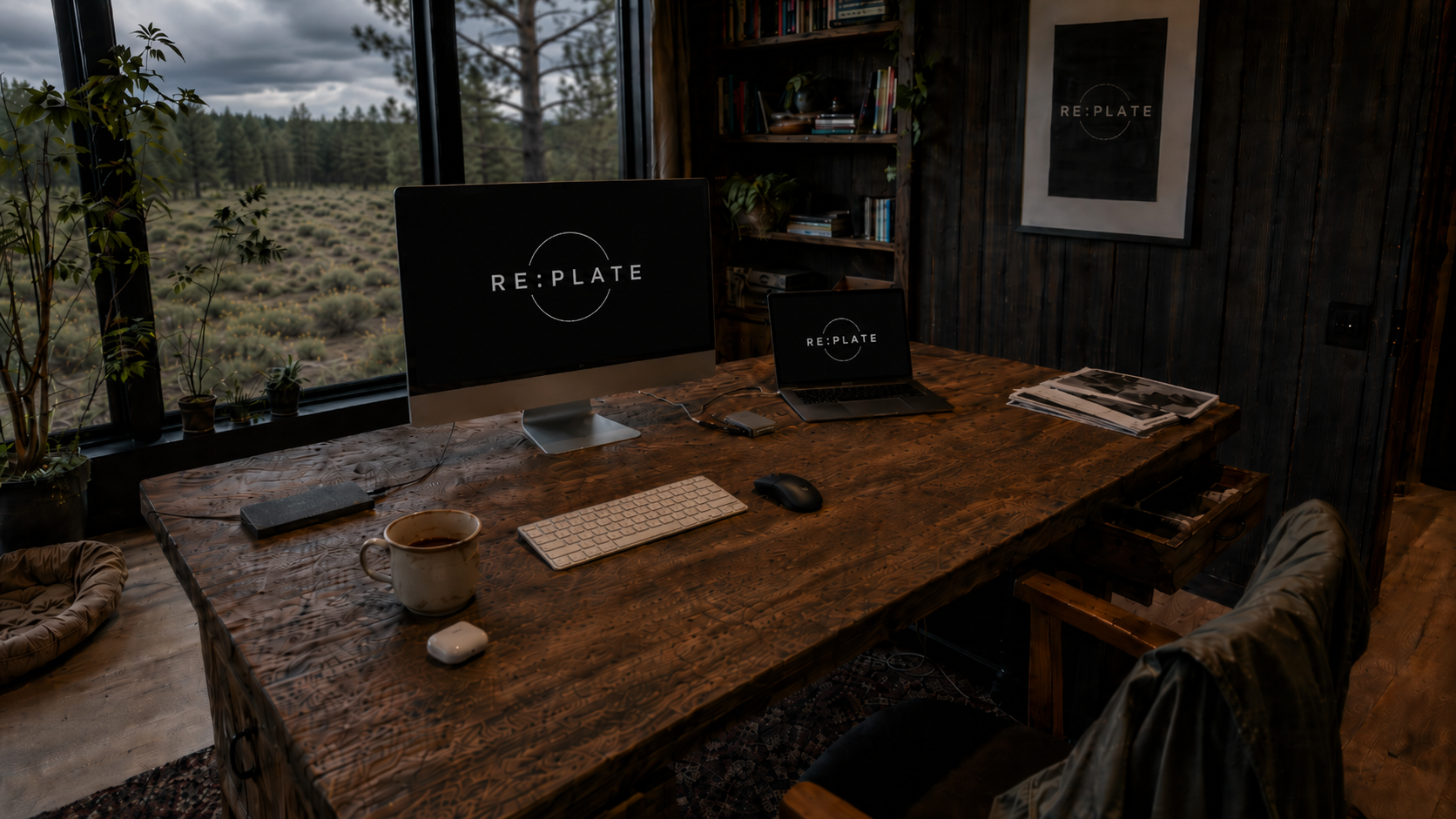
Where I Hope to End Up
These aren't photographs of my home.
They're photographs of the place I've been carrying around in my head for years.
I spent the first part of my career in conference rooms, airports, agencies, and cities that never really stopped moving. I learned a tremendous amount there, but somewhere along the way I realized I wanted a different life. I wanted quiet. I wanted work that mattered to me. I wanted to build something without constantly looking over my shoulder at whatever trend was coming next.
If RE:PLATE succeeds, this is where I hope it takes me. A small place in the woods, a desk by a window, a cup of coffee in the morning, and the freedom to spend my days solving problems for people whose work I genuinely admire.
That's not a branding exercise.
It's simply the life I'm trying to build.